

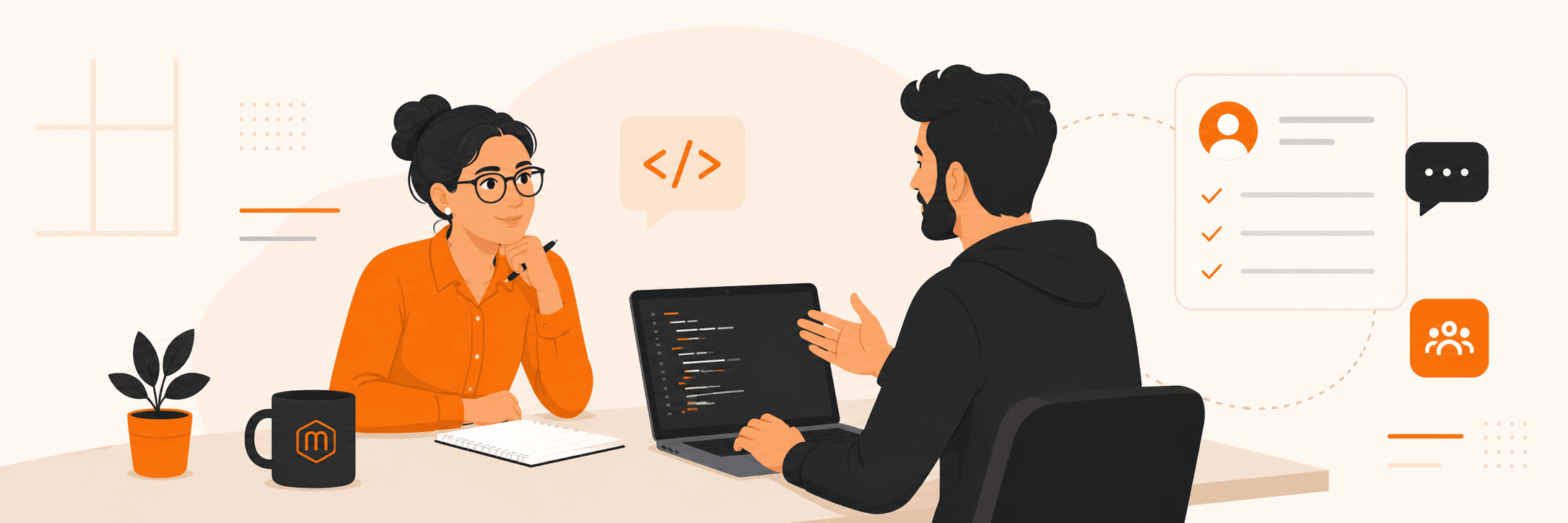

How to Interview Software Engineers Without Losing the Best Candidates
AI Changed the Tools, Not the Purpose of the Interview
As technology has improved and changed, interviews have changed too. AI may have changed the tools software engineers use, but it has not changed the purpose of the interview.
The goal of an interview is still to understand how a person thinks, solves problems, communicates, and works with others. An interview should show what they do when they face a real problem, not how much syntax they can recall under pressure.
And let’s be honest. If you ask someone who uses a tool every day to recall a small detail, such as the color of a particular button, they may not get the answer right. That does not mean they do not know how to use the tool. Focusing on small details from memory is killing your interview process.
I started conducting technical interviews long before candidates had Google, documentation, or AI available in front of them. I have seen firsthand how the tools have changed over time, so the interview process had to change with them. If someone will use these resources in their actual job, I want to see how well they use them during the interview, too.
My job is not to test their memory. My job is to understand whether they can solve the problem.
A good technical interview should reflect the work itself. It should reveal how the candidate approaches uncertainty, finds information, makes decisions, and explains their reasoning. That tells me far more than any theoretical quiz ever could.
Make the Interview Look Like the Actual Work
A technical interview should not feel like a college exam. Again, engineers are not hired to sit in a room and prove how much syntax they have memorized. They are hired to solve problems.
During the workday, they will use Google, documentation, AI, and whatever other tools help them get to the right answer. Banning those tools during an interview creates an artificial environment that tells me very little about how the person will actually perform.
I would rather give a candidate a realistic problem and watch how they approach it with all the tools available to them. How do they break it down? What questions do they ask before they begin? Where do they look for information? How do they decide whether the answer they found is reliable? Can they explain why they chose one solution over another?
The tool itself is not the skill. Knowing how to use it well is.
I do not need someone to remember every command or piece of syntax. I need to know whether they can reach a good solution, explain their reasoning clearly, and recognize when their first approach is not working. That is much closer to the job they will actually be doing.
Keep the Interview Process Clean
A good interview process should give the company enough information to make a decision. It should not become a test of how much time and frustration a candidate is willing to tolerate.
Some companies put engineers through eight or ten interview stages, then take weeks to decide what happens next. That does not create a better hiring decision. It creates more opportunities to lose the candidate.
Strong engineers usually have other options. Even when your company is their first choice, they may accept another offer because that company was ready to make a decision. Candidates cannot wait indefinitely without knowing whether an opportunity will move forward.
It does not take six interviews to decide whether someone is a match.
For most roles, three stages should be enough. Start with an introductory conversation to confirm basic alignment. Follow it with a technical deep dive based on realistic work. Then have a final conversation about the role, the team, expectations, and whether both sides believe the relationship can work.
Overthinking whether someone is a match and losing a good candidate is a much bigger risk than hiring them, realizing they are not a match, and letting them go. I always say that hiring someone is like a marriage, but firing them is not like a divorce.
Take-home assignments have also become less useful. It is harder to know who completed the work, and long tasks ask candidates to invest several unpaid hours before the company has invested much time in them. The more senior and in demand the engineer is, the less likely they are to agree to that.
The objective should be to gather the right information and make a clear decision. Adding more stages does not automatically make the process more reliable.
Stop Asking Questions That Create Interview Theater
Generic interview questions often reward people who are good at interviewing, not people who will be good at the job.
“What is your biggest weakness?” pushes candidates to choose a harmless weakness and turn it into a strength. “Where do you see yourself in five years?” asks them to predict something they probably cannot know.
By the way, there are only two honest answers to that question. The first is, “I don’t know.” The second is, “In your position.”
These kinds of questions force people to arrive at rehearsed answers because an honest answer may work against them.
These questions create theater. Both sides know the performance and the script, but neither learns anything real from it.
I prefer situational questions based on the candidate’s actual experience. Tell me about a difficult problem you solved. What problems have you experienced with this tool? What would you do in this situation? Why did you choose that approach? What would you do differently now?
I once asked a candidate about the problems they had experienced with several tools they used regularly. The answer was that there were no problems. I asked similar questions a few more times and received the same kind of response.
I was not looking for one correct criticism of the tool. Every tool has limitations, confusing parts, or something that could work better. I wanted to see whether the candidate could reflect on their experience, explain their observations about the tool, and describe how they might improve it. Do they think outside the box, or do they settle for whatever they have?
An interview should be a conversation, not a checklist. My next question should depend on the answer the candidate just gave me. That is how I learn what they understand, how deeply they think, and whether they can communicate beyond a prepared response.
Ask What the Candidate Actually Wants
The most important questions I ask in an interview are simple:
“What are you looking for in your next job?”
“What do you expect from us?”
The first answer is not always the real answer. Candidates often tell you what they think you want to hear, so you have to listen carefully and ask follow-up questions until you understand what actually matters to them.
They may be looking for stability, mentorship, autonomy, teamwork, predictable hours, more responsibility, or a faster environment. None of those answers is good or bad on its own. The question is whether what they want matches how your company really operates.
Suppose someone tells you they left their previous job because the company was chaotic and they were expected to work late every night. If your company is also chaotic and regularly requires late nights, that person is not the right fit. It does not matter how strong they are technically. Ignoring what they told you will only delay the problem.
Companies need to be just as honest as candidates. Explain how the team works, what the role requires, what problems the person will face, and what success looks like. Do not describe the environment you wish you had. Describe the one they will actually join.
A good interview is not about convincing every strong candidate to accept the job. It is about finding the people who can do the work and will be comfortable doing it in your environment.
You Can Use AI to Support the Interview, Not to Replace the Human
There is a big difference between using AI during an interview for support and letting AI conduct the interview.
AI can be useful as an assistant. It can document the conversation, take notes for you, analyze responses, identify gaps, and suggest follow-up questions. The interviewer can then decide whether those questions are relevant and how the candidate’s answers should be interpreted.
We use this kind of support ourselves. The AI listens to the conversation and may suggest an area worth exploring, but a human is still conducting the interview. The conversation remains natural, and the final judgment stays with the person who understands the role, the team, and the company.
A fully automated AI interview is different. The company is asking the candidate to invest their time without investing any human time in return. That immediately affects how the candidate sees the company.
We actually experimented with fully AI-led interviews. The candidates were informed beforehand about the experiment and agreed to try it. Not surprisingly, the majority of candidates were unwilling to continue after a few minutes. The people with the most options were also the least likely to accept being interviewed by an agent.
An interview is a two-way street. You are interviewing the candidate, but the candidate is also interviewing you.
Not giving candidates a chance to interview you in return, while investing no real time in them and offering no opportunity to ask questions about your company, is disrespectful. It reflects negatively on the company.
AI can make a human interviewer better prepared and more attentive. It should not remove the human relationship that the interview is supposed to build.
The Best Interview Builds a Human Relationship
The most valuable thing you can do when interviewing a human being is establish a human relationship with that person.
An interview should not feel like a competition between the hiring manager and the candidate. The goal is not to catch someone making a mistake or prove that the interviewer knows more. The goal is to create enough trust for both sides to speak honestly.
When I interview someone, I explain what the role actually involves, how the team communicates, what I expect, what challenges they will face, and what kind of person tends to succeed in the environment.
Some hiring managers worry that sharing too much gives the candidate an unfair advantage. I see it differently. I want the candidate to understand what I am looking for because I want an honest answer about whether they can and want to do the job.
By building that relationship, I learn who the candidate is. At the same time, they learn who I am and what working with the company will actually feel like.
That is important because the objective is not simply to pass someone through the interview process. It is to determine whether both sides can work together successfully.
A good interview should leave the candidate with a clear understanding of the role, not the feeling that they have just survived an interrogation.
Hire for the Work and the Relationship
A good interview needs to answer two questions:
Can this person do the work?
Should this person want to do this work here?
You cannot ignore the connection and chemistry created between the candidate and the hiring manager during the interview process. Technical skills tell you whether someone can complete the work. Communication, trust, behavior, and shared expectations tell you whether the relationship can succeed.
When companies focus only on technical skills and treat soft skills as secondary, they often lose the strongest candidates or hire people who will never work well with the team.
At Mirigos, we help companies identify engineers with the right technical foundation, communication style, and ability to work as part of their existing team. Our technical screening gives the company an informed starting point, but it does not replace its own interview or final decision.
The goal is not to send the next available engineer through the process. It is to help both sides decide whether they can build a successful working relationship that lasts.
No interview process can remove every hiring risk. That is not the goal. The goal is to make the best possible decision without turning the process itself into an obstacle. Respect the candidate’s time, show them the real job, and give them the same honesty you expect from them. That is how you hire people who can do the work, want to be there, and have a real chance of succeeding with your team.